Kolkata: A proposed revision of school textbooks in West Bengal has triggered a debate over language, cultural identity and the content taught in government schools. The state's Syllabus-cum-Curriculum Review Committee has recommended replacing certain words used in Bengali-language textbooks, including 'paani' with 'jol', 'abba' with 'baba' and 'amma' with 'maa'.
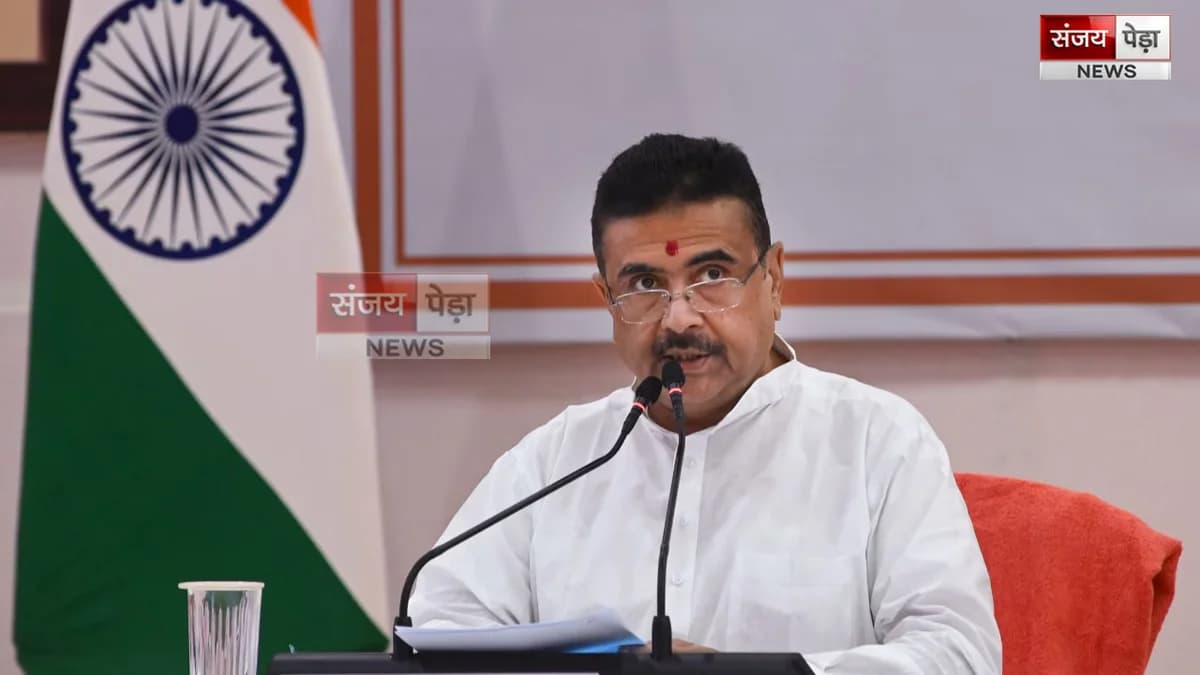
The recommendations are part of a wider curriculum review initiated by the government led by Chief Minister Suvendu Adhikari. The committee is headed by Kalyani University professor Debashis Chatterjee.
Explaining the proposed changes, Professor Debashis Chatterjee said the committee wanted textbooks to reflect words commonly used in everyday Bengali conversations.
According to reports, Chatterjee argued that terms such as 'jol', 'baba' and 'maa' are more familiar in everyday Bengali usage than the alternatives being replaced.
The recommendations have nevertheless drawn attention because the words in question also have linguistic and cultural significance across different communities.
The proposed language revisions form only one part of a wider restructuring of West Bengal's school curriculum.
Among the other recommendations is the inclusion of the life and contributions of Dr Syama Prasad Mookerjee in school textbooks across different classes.
The committee has also proposed reducing the coverage of Mughal history and Marxist ideology in history textbooks, while placing greater emphasis on freedom fighters and other historical figures.
Several changes have also been proposed in the Bengali literature syllabus.
Rabindranath Tagore's poem 'Africa' has been recommended for replacement with 'Shivaji Utsav'. Similarly, Sachindranath Sengupta's play 'Sirajuddaula' may be replaced by Dwijendralal Roy's historical drama 'Mewar Patan'.
The proposed revisions also include changes to chapters discussing the Singur land movement and the Kanyashree scheme, both associated with the previous Trinamool Congress government.
According to the committee chairman, the revised textbooks are being prepared under a tight publication schedule. The first set of revised books is targeted for distribution by January 2, 2027.
With more than 120 million textbooks reportedly needing publication and distribution, the committee has prioritised selected amendments and corrections rather than undertaking a complete syllabus overhaul at this stage.
The proposed replacement of words such as 'paani', 'abba' and 'amma' has opened up a wider discussion about how language, regional identity and cultural diversity should be represented in school education.
While the committee has justified the changes on the grounds of everyday Bengali usage, the recommendations have also raised questions about linguistic inclusivity and the representation of different cultural influences in educational material.
The final implementation will depend on the state government's consideration and approval of the committee's recommendations.