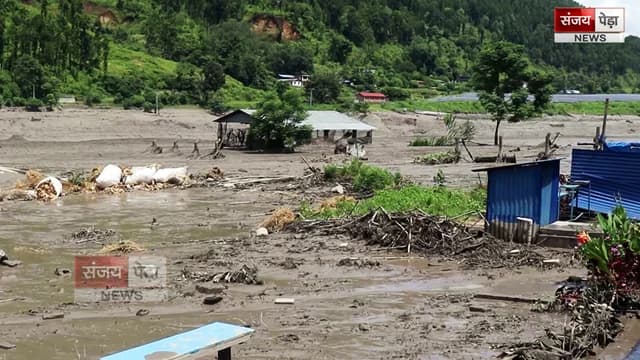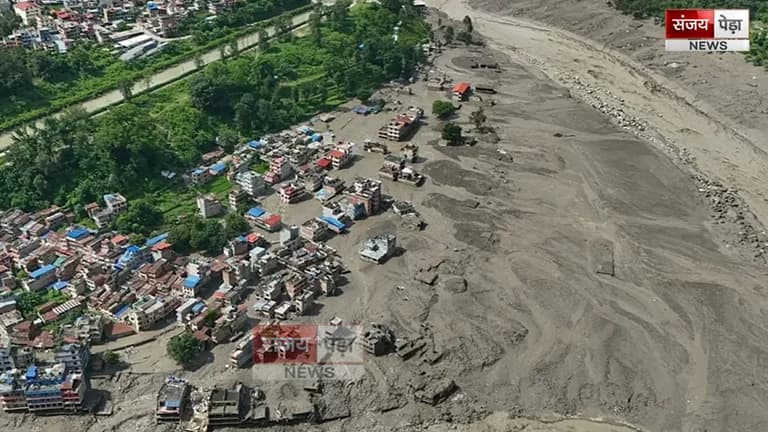
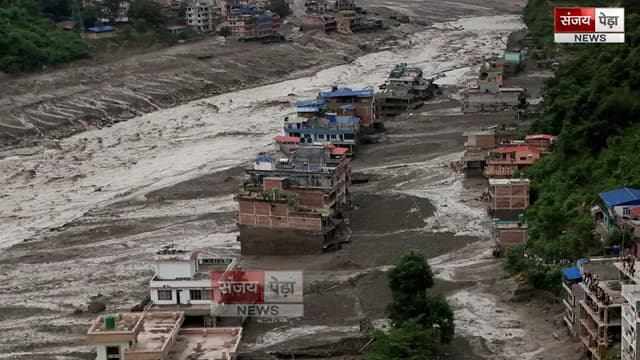
Kathmandu, August 27, 2026: Nepal is facing one of its most devastating natural disasters in recent years after a sudden flash flood tore through communities along the Bhotekoshi and Trishuli river systems, leaving at least 162 people dead and hundreds still missing.
The disaster struck on Wednesday morning, particularly affecting areas around Rasuwa and Nuwakot, after a sudden surge of water and debris entered the Bhotekoshi River. The flood later travelled downstream towards the Trishuli River basin, causing extensive destruction to settlements, roads, bridges and other infrastructure.
Ice-Rock Avalanche Suspected Behind Flood
A preliminary assessment by Nepal's National Disaster Risk Reduction and Management Authority (NDRRMA) indicates that the flash flood may have originated after an ice-rock avalanche blocked the Lendhe River near the Nepal-China border.
The suspected blockage occurred around 20 kilometres northeast of the Rasuwagadhi border crossing. When the natural obstruction gave way, a huge volume of water and debris rushed downstream towards Timure before entering the wider river system.
Disaster expert Basanta Raj Adhikari has also pointed to an ice avalanche in the Lendhe River as the likely trigger.
The sudden nature of the event made the situation particularly dangerous. There was reportedly no rainfall in the immediate area at the time, leaving residents with little or no warning before the flood swept through the settlement.
Timure and Rasuwagadhi Among Worst Hit Areas
Timure, located close to the Nepal-China border, suffered extensive destruction. Large parts of the settlement were inundated or swept away by the powerful current.
The disaster also hit the Rasuwagadhi customs area, where more than 300 vehicles and trucks waiting at the checkpoint were reportedly washed away.
Rasuwa's chief customs officer Rajendra Dhungana was among those who managed to escape by moving towards a nearby forest along with several others as the floodwaters advanced.
Indians, Tourists and Security Personnel Missing
The disaster has also raised serious concerns over the safety of foreign nationals and security personnel.
Earlier reports said at least 133 Indian nationals and 37 Non-Resident Indians (NRIs) were among those reported missing. At least 50 of the missing Indians were reportedly travelling as pilgrims for the Kailash Manasarovar Yatra.
Nepal's security agencies have also reported personnel missing from the affected areas. These include members of the Nepali Army, Nepal Police and Armed Police Force.
The latest reports indicate that search and rescue teams are continuing operations across affected riverbanks and downstream areas as authorities try to locate those who remain unaccounted for.
Roads and Bridges Washed Away
The floods and accompanying landslides have severely disrupted transportation across Nepal.
Several important highways and road sections have either been completely blocked or closed because of landslides, mud and rocks. The Kathmandu–Mugling section has faced a major disruption, while transport services have also been affected on routes including the Mechi Highway, BP Highway, Kanti Lokpath, Prithvi Highway and roads in Rasuwa and Nuwakot.
Preliminary assessments indicate that 19 motorable bridges and around 40 kilometres of highway have been washed away.
Hydropower Projects and Banking Infrastructure Damaged
The destruction has extended beyond homes and roads. Nine hydropower projects and nine branches of commercial banks have reportedly been damaged or destroyed in the disaster.
Authorities are still assessing the overall economic and infrastructure losses, with the full extent of damage to public and private property yet to be determined.
Nepal Faces a Major Rescue Challenge
The scale of the disaster has raised concerns that the flash floods could become one of Nepal's deadliest natural disasters in modern times.
The 1993 floods in Sarlahi, Rautahat and Makawanpur, which claimed around 1,400 lives, have historically been regarded as one of Nepal's benchmark flood disasters. With a large number of people still missing, officials and disaster experts fear the current tragedy could become one of the country's most serious disasters in decades.
Rescue and recovery operations remain underway, while authorities continue to investigate the exact chain of events that triggered the sudden release of water and debris.
The situation remains fluid, and casualty and missing-person figures may change as search operations continue.