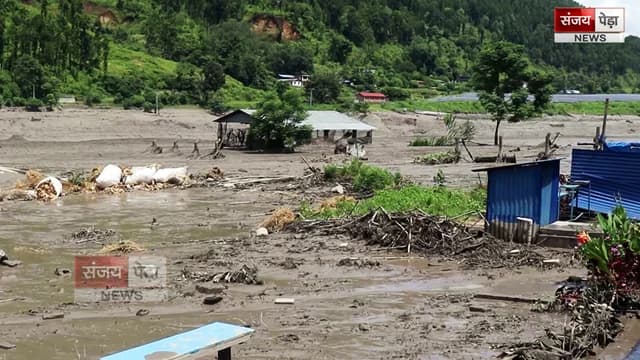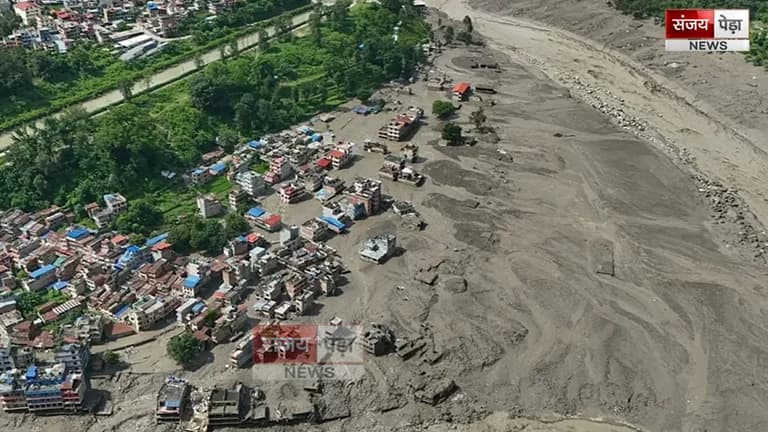
Rasuwa, Nepal, August 26, 2026: A powerful flash flood struck Nepal’s northern Rasuwa district on Wednesday morning after an unusually large volume of water suddenly entered the Bhotekoshi river system from the Tibet side, unleashing severe destruction along the Nepal-China border.
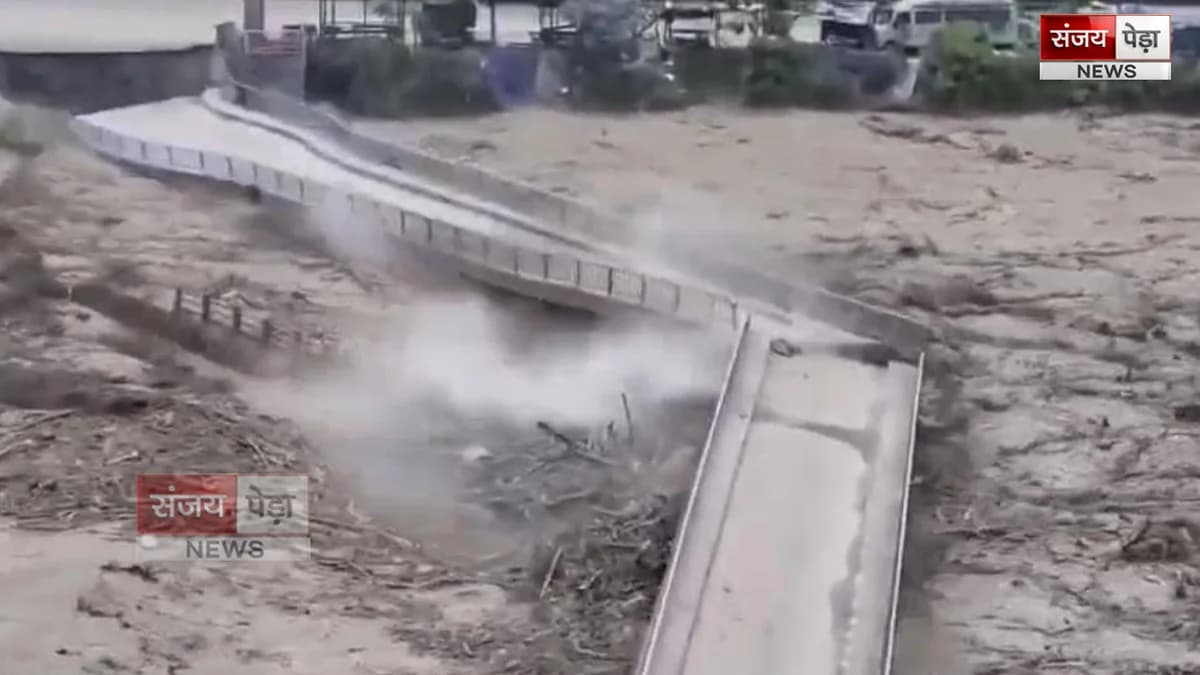
The flooding was reported at around 9:00–9:15 a.m. local time, with the force of the water rapidly overwhelming areas along the Bhotekoshi and Lhende Khola rivers. The worst-hit areas include Timure and Syabrubesi, where markets, roads, bridges, vehicles, homes and other infrastructure have reportedly been damaged or swept away.
The sudden nature of the disaster has raised questions about what triggered the massive release of water. Unlike a conventional monsoon flood, the initial reports indicate that the floodwaters entered the river system abruptly from the Tibetan side.
Authorities have yet to establish the exact cause. One possibility being examined is a Glacial Lake Outburst Flood (GLOF), in which a glacial or ice-dammed lake suddenly releases a large quantity of water. Another possibility under consideration is a combination of intense rainfall and a sudden release of water following a blockage or landslide in the upper reaches of the river system. Nepalese officials have said that the cause remains under investigation.
The human toll has also continued to emerge. At least eight bodies have been recovered, including from Nuwakot and Dhading districts, while 26 Nepal Police personnel are reported missing in Rasuwa. Several Armed Police Force personnel have also been reported missing.
The flooding has caused extensive damage to critical infrastructure along the river corridor. A major road connecting Betrawati in Nuwakot with the Rasuwagadhi border crossing has been severely damaged, with multiple sections and bridges washed away.
Hydropower and electricity infrastructure has also suffered significant damage. Reports indicate that several major hydropower and transmission facilities have been affected, disrupting electricity generation and transmission in parts of the region.
Nepal’s security and disaster-response agencies have launched search and rescue operations in the affected areas. The Nepal Army, Nepal Police and Armed Police Force have been mobilised, with helicopters being used to assist rescue efforts and assess the extent of the destruction.
Authorities have also issued warnings to communities located downstream along the Trishuli River, urging residents near riverbanks to move to safer locations and remain alert to further rises in water levels.
With communications disrupted in several locations and rescue teams still assessing the affected areas, officials have warned that the full scale of the disaster may not yet be known. Search and relief operations are continuing as authorities work to locate missing people and determine the overall damage.