World Suicide Prevention Day 2026: Why Starting the Conversation Can Help Save Lives
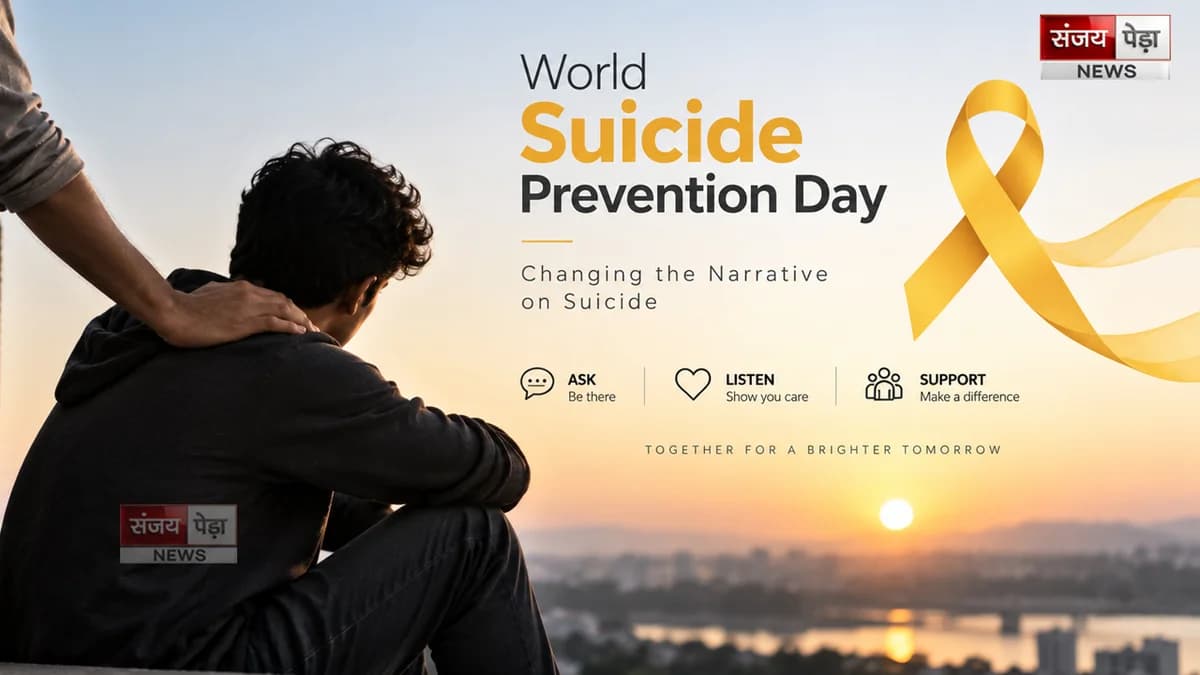
Kolkata, September 10, 2026: World Suicide Prevention Day is being observed across the globe on September 10 with a renewed call to break the silence surrounding suicide, mental distress and emotional vulnerability. This year also marks the final year of the three-year campaign centred on the theme “Changing the Narrative on Suicide”, accompanied by the call to action “Start the Conversation.”
The campaign aims to encourage a more open and compassionate approach to conversations around suicide and mental health. Instead of allowing stigma, fear and misconceptions to prevent people from seeking help, the initiative stresses the importance of listening, understanding and offering support.
World Suicide Prevention Day has been observed since 2003 under the leadership of the International Association for Suicide Prevention (IASP), with the World Health Organization (WHO) serving as a co-sponsor. The annual observance brings governments, health organisations, communities and individuals together to underline a crucial message suicide can be prevented.
Suicide remains a major global health concern
The worldwide scale of suicide highlights the urgent need for sustained prevention efforts. According to data cited by the Press Information Bureau (PIB), more than 727,000 people died by suicide globally in 2021. For every suicide death, an estimated 20 suicide attempts were recorded.
The same data shows that suicide was the third leading cause of death among people aged 15 to 29 globally in 2021.
However, the impact of suicide extends far beyond statistics. Families, friends, colleagues and entire communities can experience profound emotional, social and financial consequences following a suicide. Prevention, therefore, cannot remain limited to hospitals and healthcare professionals. Schools, workplaces, families, educational institutions, communities and government bodies all have an important role to play.
India strengthens its suicide prevention framework
India introduced its first National Suicide Prevention Strategy (NSPS) in 2022, setting a target of reducing suicide mortality by 10 per cent by 2030.
The strategy adopts a multi-sectoral approach and includes several measures aimed at early identification, prevention and access to support. These include mental health screening in schools and colleges, crisis helplines, psychological support centres, awareness programmes and mental health interventions in workplaces.
Data cited by PIB from the National Crime Records Bureau (NCRB) also points to the continuing challenge in the country. India's suicide rate rose from 9.9 per lakh population in 2017 to 12.4 per lakh in 2022, highlighting the need for continued and coordinated intervention.
Tele-MANAS expands access to mental health support
One of the significant steps taken by the Government of India has been the expansion of accessible mental health services through digital platforms.
The National Tele Mental Health Programme, Tele-MANAS, was launched in October 2022 to provide round-the-clock tele-counselling services. People can access the service through 14416 and 1-800-891-4416.
According to a PIB release, as of August 6, 2026, Tele-MANAS had established 53 cells across all 36 States and Union Territories and had received more than 4.325 million calls.
The programme has also evolved beyond conventional telephone counselling. The Tele-MANAS mobile application provides mental health assistance covering concerns ranging from general wellbeing to mental disorders. A video consultation facility has also been introduced as an extension of the audio-based service.
District-level mental health services continue to grow
The Government's District Mental Health Programme (DMHP) is another important component of India's mental healthcare network.
According to PIB, the programme currently covers 767 districts and provides services including counselling, outpatient treatment, suicide prevention initiatives and public awareness programmes.
The programme also focuses on identifying mental health concerns at an early stage and connecting people with appropriate treatment and support.
Young people remain a key focus
The emphasis on early intervention is particularly important among children and young people. Several government programmes have been introduced to strengthen mental health and psychosocial support in educational and community settings.
Initiatives such as the Rashtriya Kishor Swasthya Karyakram (RKSK), the School Health and Wellness Programme and Manodarpan seek to address mental health concerns among adolescents and students while improving access to support.
The Ministry of Education has also highlighted the need to address circumstances associated with student suicides. A PIB release in 2026 noted that NCRB data has identified factors such as family related problems, relationship issues, illness and examination failure among the causes associated with student suicides.
In response, the Government has been working to provide psychological assistance to students, teachers and families, while also strengthening mental healthcare services at the primary healthcare level.
Changing the way we talk about suicide
The central message of World Suicide Prevention Day 2026 is not simply about responding to a crisis. It is about creating an environment where people feel comfortable speaking about their emotional struggles before they reach a critical point.
“Changing the Narrative on Suicide” means challenging the stigma and misconceptions that often surround mental health and suicide. It also means learning to listen without judgement and recognising that asking someone how they are doing can be an important first step towards providing support.
For families, schools and workplaces, creating safe spaces for these conversations can help people feel less isolated and more willing to seek professional assistance when required.
From silence to meaningful support
As World Suicide Prevention Day 2026 marks the final year of the three year “Changing the Narrative on Suicide” campaign, its message of “Start the Conversation” remains particularly relevant.
Preventing suicide requires sustained efforts at multiple levels from accessible mental healthcare and crisis support to awareness programmes, early intervention and compassionate communities.
A conversation may not solve every problem, but it can help someone feel heard, understood and less alone. Keeping those conversations open, respectful and free from stigma is an important part of building a stronger suicide prevention framework.