
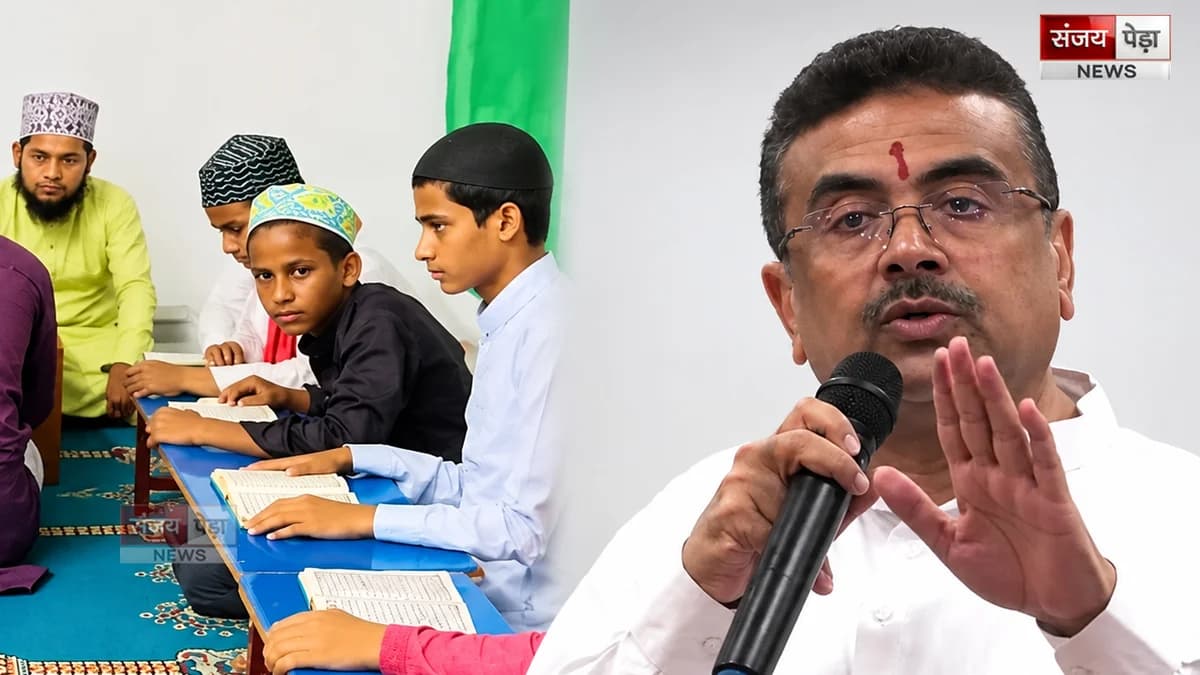
Kolkata: The West Bengal government has initiated a major verification and enforcement exercise against unaided madrasas operating across the state. Following inspections and field verification, the Minority Affairs and Madrasa Education Department has issued closure notices to 252 madrasas, while around 100 others have been served show-cause notices.
According to Kshudiram Tudu, Minister-in-Charge of the Minority Affairs and Madrasa Education Department, the institutions facing closure notices were found to lack minimum infrastructure required for functioning.
The minister said the institutions that have received show-cause notices will have an opportunity to respond. If their explanations fail to satisfy the authorities, further action may be taken against them.
The government has stated that the broader objective of the exercise is to ensure that madrasa students receive access to modern and mainstream education and have opportunities comparable to students studying in other educational institutions.
Malda Records Highest Number of Closures
Among the districts, Malda has the highest number of madrasas facing closure notices, with around 44 to 45 institutions on the list.
North Dinajpur follows with approximately 37 madrasas, while around 32 institutions in South 24 Parganas are also facing similar action. Murshidabad and Nadia have around 25 institutions each on the list.
The action comes after the state administration conducted a detailed verification of madrasas operating across West Bengal, with particular attention being given to Khariji madrasas.
Khariji madrasas are independently run Islamic educational institutions that generally function without government funding or formal affiliation. Such institutions are primarily dependent on donations from the public and charitable organisations.
State-Wide Verification Conducted
The verification exercise involved district administrations across the state. Magistrates covering 22 districts and the Kolkata area submitted reports on the madrasas functioning within their respective jurisdictions.
Authorities collected information on several aspects of the institutions, including their registration and affiliation status, management, student enrolment, identity records, teaching staff, infrastructure and sources of funding.
The district-level reports indicated that around 2,132 madrasas had proper registration or affiliation, while approximately 2,396 were operating without the required registration or affiliation from any government authority or board.
To verify these findings, the state department subsequently deployed dedicated inspection and investigation teams. These teams were tasked with checking whether the information submitted by the institutions matched their actual conditions.
Infrastructure and Academic Concerns
During the verification process, officials identified several deficiencies in some of the institutions. These included inadequate classroom space, insufficient numbers of students or teachers, and alleged deviations from the standard state school syllabus and administrative rules.
The state government has indicated that the verification process will continue and that institutions found to be unauthorised or non-compliant could face further action in accordance with the applicable rules.
A senior Nabanna official also alleged that authorities had found instances in some Khariji madrasas where what was described as “anti-India” education was being imparted and students were allegedly being influenced.
These are allegations attributed to the official and would need to be established through evidence and due legal process.
The department has maintained that future action will be based on verification, evidence and the relevant legal framework. The government says the exercise is intended to bring unauthorised institutions under scrutiny and ensure that students receive adequate educational facilities and a modern curriculum.