
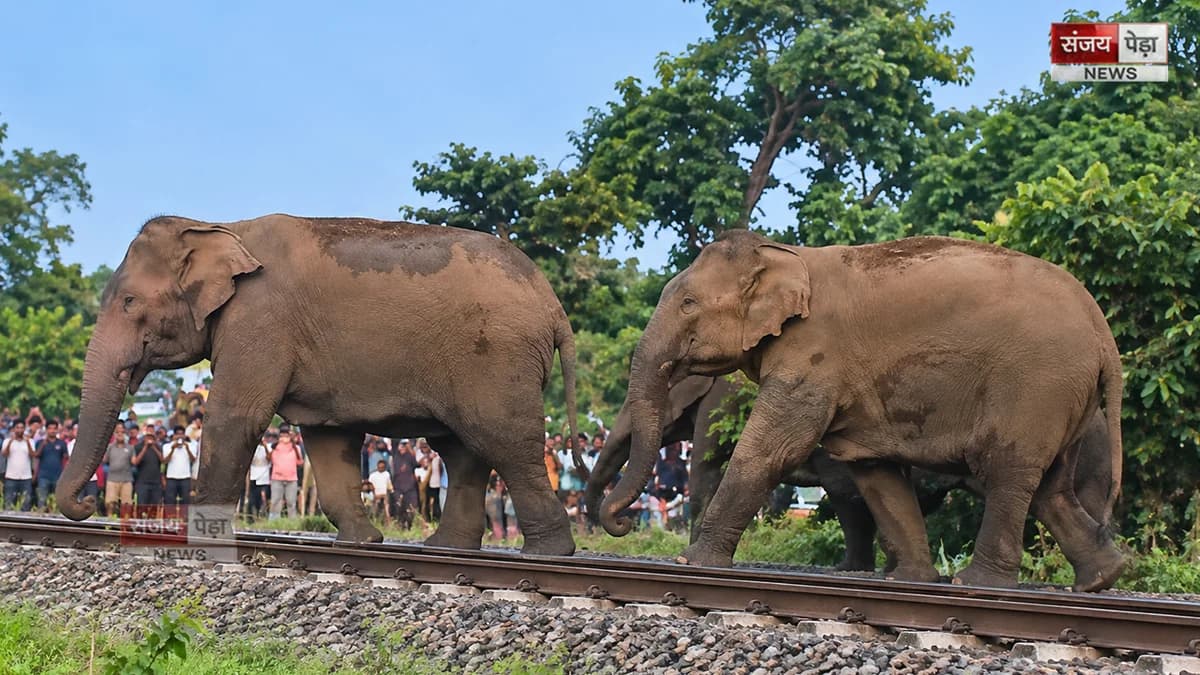
A major wildlife management operation in North Bengal has successfully moved a herd of more than 100 elephants from Tukriajhar forest to Bagdogra forest, helping reduce the risk of human-elephant encounters near populated areas.
The operation was conducted on Saturday by the Kurseong Forest Division and lasted approximately six hours. During the drive, the elephants were guided across tea gardens, residential settlements, Asian Highway II and railway tracks, covering a distance of more than 20 kilometres.
According to reports, the herd had been gathering in the Tukriajhar forest area near Naxalbari in the Siliguri subdivision over the previous two weeks. The forest's limited vegetation and proximity to human settlements raised concerns about the safety of both residents and wildlife.
More than 70 people participated in the operation, including forest department personnel, volunteers from the wildlife conservation organisation Jumbo Troops and members of forest protection committees. Nine quick-response vehicles and two tractors were deployed to support the relocation effort.
One of the most sensitive stages of the operation involved crossing the railway tracks near Kiranchandra Tea Garden in the Bagdogra area. The forest department coordinated with railway authorities, who imposed a speed restriction while the elephants crossed.
As the Delhi-bound Mahananda Express approached the stretch, a forest department employee reportedly waved a red flag to alert the train crew and stop the train, allowing the herd to cross safely.
Divisional Forest Officer of Kurseong, Devesh Pandey, acknowledged the considerable effort required to guide such a large herd through human settlements and across major transport routes.
Rikjyoti Singha Roy, founder-president of Jumbo Troops, explained that elephants regularly move from Mahananda Wildlife Sanctuary towards Bagdogra through the Bamanpokhri range, following the Balason river embankment. This movement generally occurs between October and January.
The timing of the operation was significant, as seasonal elephant movement coincides with the agricultural harvesting period, when the possibility of encounters between people and elephants can increase.
The successful relocation highlights the importance of coordination between forest officials, railway authorities, wildlife conservation groups and local forest protection committees in safeguarding wildlife and reducing conflict with nearby communities.