Photo Credit: SHIV KUMAR PUSHPAKAR
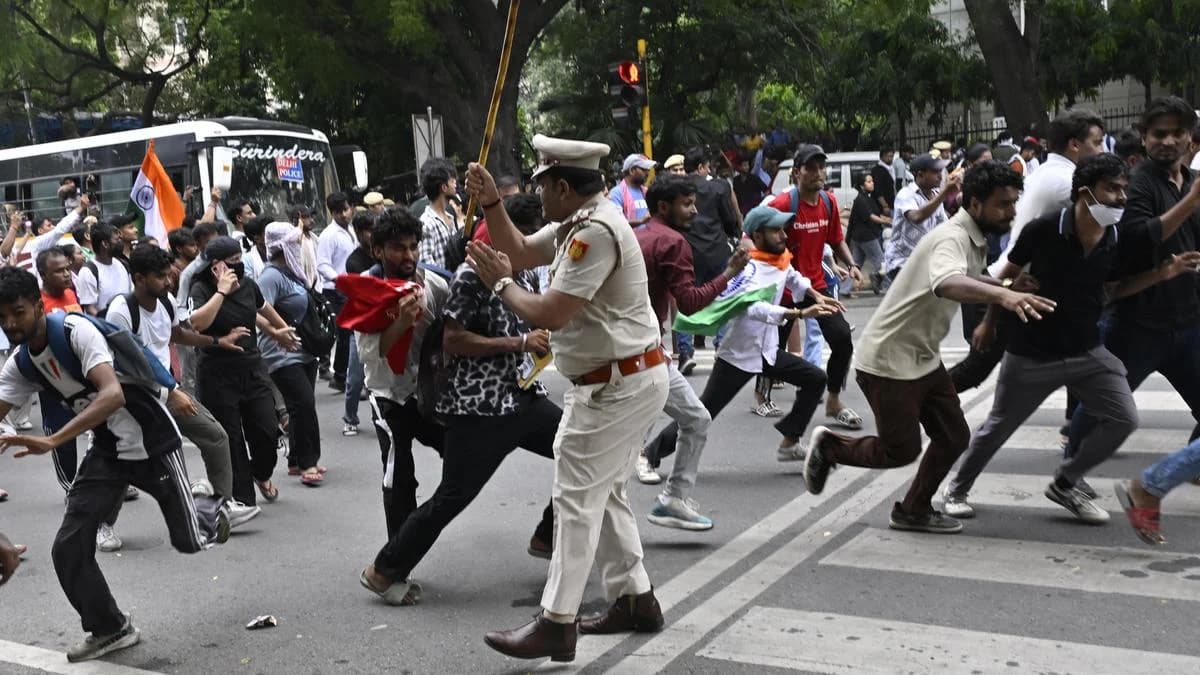
The police response to the Cockroach Janta Party’s (CJP) “Chalo Sansad” march earlier this week has once again put the spotlight on the limits of police power. As videos showing the use of tear gas, pellet guns and lathi charges during the protest circulated widely, the incident reignited questions over when force may be used, the safeguards governing arrests, and the balance between maintaining public order and protecting civil liberties.
Under the Bharatiya Nagarik Suraksha Sanhita (BNSS), force may be used to disperse an unlawful assembly only after an order to disperse is disobeyed, and the Code of Conduct for the Police in India says officers should first rely on persuasion, advice and warning, using only the irreducible minimum force when force becomes unavoidable. The NHRC’s Manual on Human Rights for Police Officers similarly describes democratic policing as protecting “the rights of citizens and the rule of law.”