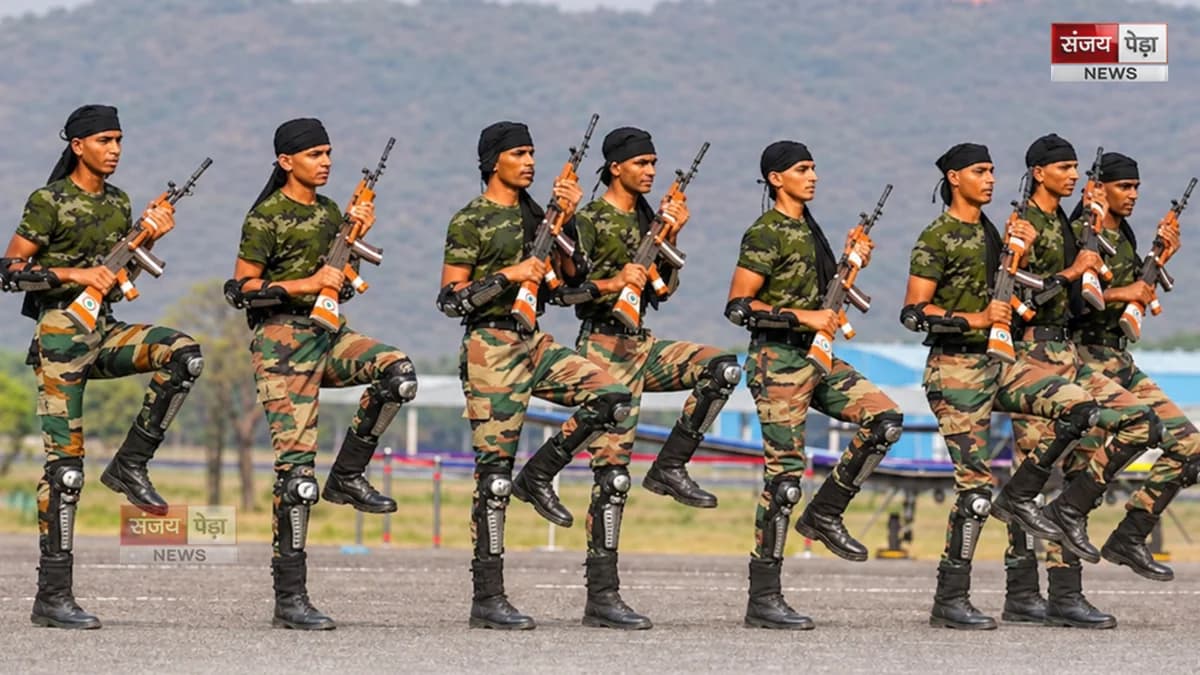
NEW DELHI: In a significant decision concerning India's military recruitment framework, the Union Cabinet chaired by Prime Minister Narendra Modi has approved a two-year extension in the service tenure of Agniveers recruited under the Agnipath scheme.
The announcement was made by Chief of Defence Staff (CDS) General NS Raja Subramani following the Cabinet's decision. The development comes at a crucial time, as approximately 18,300 Agniveers from the first recruitment batch were scheduled to complete their initial four-year engagement and leave the armed forces by December 2026.
Explaining the government's decision, General Subramani said the scheme was always intended to undergo periodic assessments. After reviewing the performance of Agniveers over the years, the government decided that extending their engagement by another two years would be beneficial for the armed forces.
He further clarified that Agniveers would have an opportunity to continue their association with the military. However, their continuation and future selection would depend on individual performance, evaluation and the prescribed assessment process.
Under the revised arrangement, the personnel who are not absorbed into the regular cadre after their initial four-year tenure will be offered an additional two years of service. The existing provision allowing up to 25 per cent of each batch to be selected for permanent enrolment in the armed forces remains an important part of the framework.
The extension is expected to provide the armed forces with additional time to utilise the training, experience and operational skills acquired by Agniveers during their initial service period. It also creates another opportunity for eligible personnel to demonstrate their capabilities before the next stage of selection.
Introduced in June 2022, the Agnipath scheme recruits young personnel into the Indian Army, Navy and Air Force for an initial four-year period. The latest decision marks a significant development in the implementation of the scheme, particularly as the first batch approaches the completion of its original service tenure.
Further details regarding the implementation and applicable service conditions are expected to provide greater clarity on the revised arrangement.