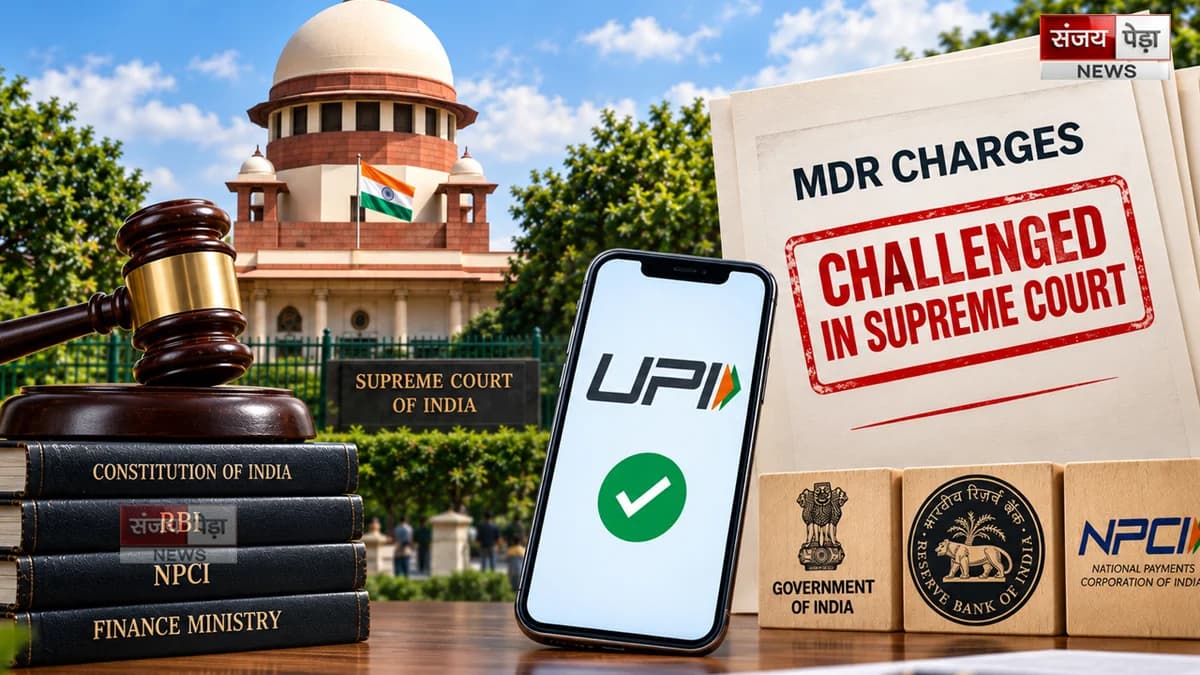
A fresh legal challenge has reached the Supreme Court over the proposed levy of Merchant Discount Rate (MDR) on high-value UPI transactions.
The petition has been filed by Advocate Anjan Datta against the Union Government, the Reserve Bank of India (RBI) and the National Payments Corporation of India (NPCI). The plea challenges the recent notifications issued by the Finance Ministry that have paved the way for charges on certain merchant transactions made through UPI.
Under the new framework, a 0.4% MDR is scheduled to apply from October 15, 2026, on eligible person-to-merchant UPI payments above ₹2,000, subject to category-specific provisions and a maximum charge of ₹300 for applicable transactions. Person-to-person UPI transfers are not covered by the MDR.
The petitioner has sought the quashing of the Finance Ministry's notifications, arguing that introducing such charges could eventually increase the financial burden on ordinary users if the additional cost is passed on through merchants.
The issue has gained attention as UPI has become a major part of India's everyday digital payment system. The government, meanwhile, has maintained that the proposed MDR is aimed at supporting the costs associated with maintaining and strengthening the UPI ecosystem, while the charges are to be borne within the merchant-payment framework rather than directly imposed on consumers.
The Supreme Court's consideration of the plea could therefore have wider implications for the future structure of charges surrounding India's digital payments network.